By Dawn Browning | Conscious Breathing | Holistic Wellness | Breathwork for Beginners

A breath that changed everything
I didn’t expect tears within seconds of beginning a yoga therapy session. But there she was—eyes closed, breathing mindfully, posture softening—as her emotions rose to the surface.
A rising star of a scientist, she hadn’t realized how much she was carrying until she paused long enough to feel it. Not just physically, but mentally and emotionally too.
Conscious breathing in our session gave her space to release and became a tool she could return to anytime. If you’ve ever longed for that kind of relief, this guide is for you.
Let’s start with the basics.
What is Conscious Breathing?
Your breath is directly linked to your nervous system. Fast, shallow breathing triggers anxiety. Slow, intentional Conscious Breathing (also called breath awareness or intentional breathwork) is the practice of observing and guiding your breath in a deliberate way to support mental, emotional, and physical well-being.
It can also be the earliest stage of Pranayama, the 4th limb of Ashtanga yoga. It’s not just about “taking a deep breath.” It’s about creating a relationship with your breath, a rhythm you can return to when life pulls you in many directions all at once.
There are many styles of conscious breathing, from the ancient yogic practice of Pranayama to modern techniques like circular connected breathwork. But the heart of it is simple:
You bring your awareness to your breath.
And through the breath, you can break down layers of tension.
Why Conscious Breathing works (and how it helps)
Your breath is interconnected with your nervous system. Fast, shallow breathing triggers anxiety. Slow, intentional breathing tells the body, “You’re safe.” Here’s how it works:
- Stimulates the vagus nerve Calms the fight-or-flight response, lowers heart rate
- Improves heart rate variability (HRV) Builds emotional resilience and stress tolerance
- Balances oxygen and CO₂ Prevents hyperventilation and brain fog
Conscious Breathing can release emotional tension. Some breath patterns can unlock stored emotions held in your tissues. In yogic terms, you’re also cultivating Prana—life force energy that flows through and around you. You don’t need to believe in energy to feel the shift.
Simply try a few breaths and notice how your body responds.
Common types of Conscious Breathing
Think of each technique like a different doorway into calm. Some are energizing, some grounding, some balancing. Here are a few foundational Conscious Breathing practices:
1. Adham Pranayama or Diaphragmatic Breathing (Belly Breath)
Slows everything down. Great for anxiety or grounding before sleep. → Use this for stress relief.
2. Sukha Purvaka or Box Breathing
Used by athletes, yoga practitioners, even Navy SEALs. Balances and centers. Breath retention can be activating, so I don’t recommend this when you’re anxious or agitated. → Use this for mental focus.
3. Nadi Shodhana (Alternate Nostril)
Balances the left and right sides of the brain. Calms mental chatter. → Explore this to harmonize your thoughts with a calm inner peace.
5. Circular or Connected Breathwork
A more recent phenomenon and breathing style often used for emotional release. Usually done in a group setting with music. → Good for emotional release when guided by a trusted and qualified teacher.
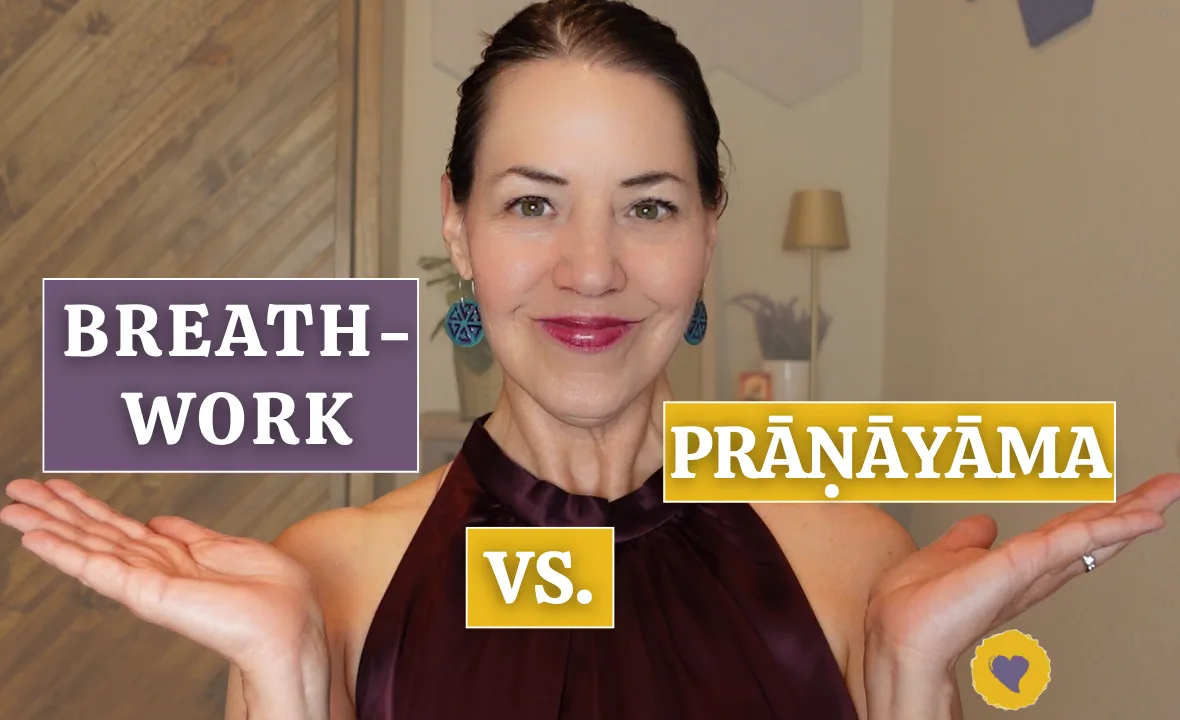
Breathwork vs. Pranayama (What’s the difference?)
It’s easy to get confused by the terms, especially with so many TikTok trends and Instagram reels floating around. Let’s define the terms:
| Term | Focus | Best For |
| Breath Awareness | Noticing your breath without changing it | Grounding in the moment when you feel scattered |
| Conscious Breathing | Gentle, intentional breathing (can include ratios or techniques) | Accessible nervous system support |
| Pranayama | Yogic breath awareness and expansion (with spiritual roots) | Mental focus, nervous system support, and preparing for meditation |
| Breathwork | Emotionally expressive breath styles (e.g., connected breath) | Releasing stored emotions |
To learn when and why you might choose Pranayama instead of Breathwork, watch my YouTube video linked in the Recommended Resources section below.

How to begin (without overwhelm)
You don’t need incense or a fancy meditation cushion to begin. You need a mindful moment. Here’s a simple way to start: 4-Minute Conscious Breathing Ritual
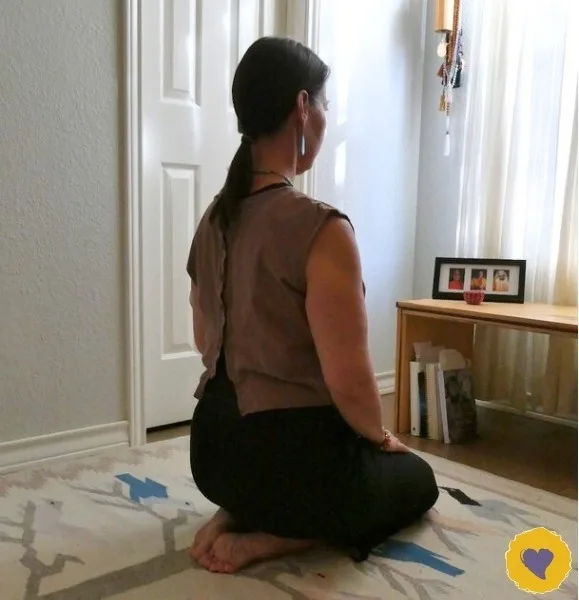
- Sit or lie down with the spine long. Sitting is preferred.
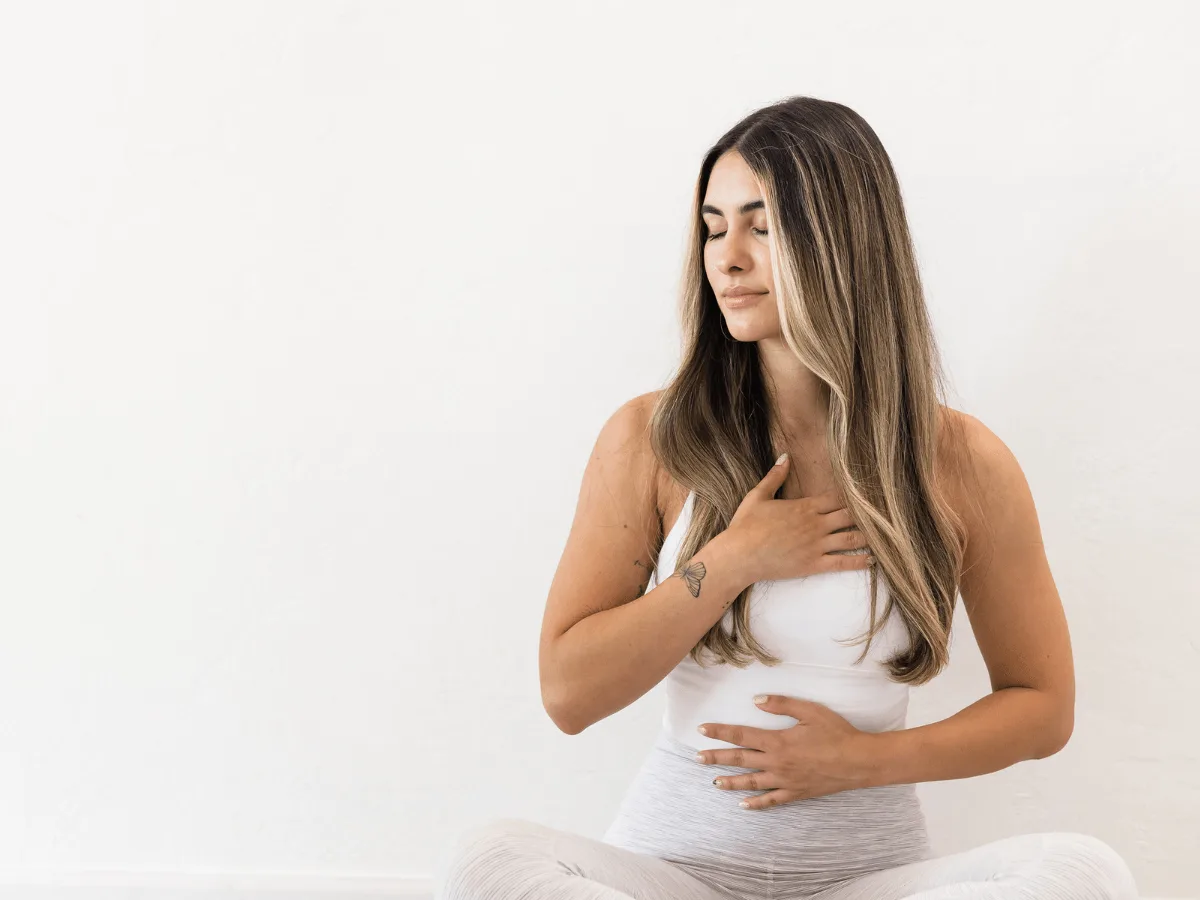
- Place one hand on your low ribs.
- Inhale for 6 counts (or 4 if 6 is difficult).
- Exhale for 6 counts.
- Repeat slowly for 6, 9 or 18 rounds. That’s it. If you’d like guidance, you can grab our free 4-minute guided breathwork audio. With clear instruction, it’s perfect for beginners and yoga practitioners alike.
→ Click this link to grab that audio.
What clients notice after starting conscious breathing
After 7 days of regular practice as part of my 7-Day Energy Reset, people said:
- “In a few days I felt connected, aware and focused. A definite reset.” – Ophelia
- “I shifted my state from tired to thoughtful and grateful.” – Beth
After one of my Pranayama workshops, Roberta said:
- “During the practice of the 3 breathing exercises shared, I became more relaxed, grounded and focused. The brain noise volume dropped dramatically.”
Where to go next (Recommended Resources)
You don’t need to walk this path alone. Here are some beautiful next steps:
- Best Breathing Exercises for Stress Relief 5 simple techniques to calm your mind and body
- Daily Breathwork Techniques for Energy YouTube playlist that explains how and why breathwork works with a guided breath practice to reduce stress
- Breathwork vs Pranayama: Why One Triggers Anxiety and the Other Creates Calm YouTube video where you learn when and why you might choose Pranayama instead of Breathwork, watch this YouTube video.
- Build Your Breath Practice Fast Download 4-min guided audio Regulation Ritual breath practice to override stress fast
Common myths about breathwork (and what’s true)
Myth #1: Breathwork has to be intense to be effective.
Truth: Some styles of breathwork are intense (like circular breathing or holotropic work), but gentle practices like Sukha Pranayama or “belly breathing” are just as powerful, especially for long-term nervous system regulation.
Myth #2: You should always take deep breaths.
Truth: Depth isn’t everything. Over-breathing or chest breathing can increase anxiety. What matters more is a slow, even breath that includes the diaphragm and engages a longer exhale.
Myth #3: Breathwork replaces therapy or medical treatment.
Truth: Absolutely not. Breathwork and conscious breathing complement care by licensed members of your medical team. Breathwork is not a cure-all. It can support mental health, but it’s not a replacement for professional care. Partner with a licensed medical professional to manage medical conditions.
Myth #4: You have to sit still in silence.
Truth: You can breathe consciously while walking, cooking, stretching, or journaling. Breathwork is a practice of presence, not perfection.
Conscious Breathing vs. meditation: What’s the difference?
It is perhaps easiest to understand the difference when we look at the question from a yogic perspective, and specifically, from my study and embodiment of yoga as taught in the Rishiculture Ashtanga Gitananda yoga tradition.
Breathwork and meditation are often associated in modern discussions of yoga in the West. The truth is Pranayama, the art and science of expanding our awareness of Prana precedes states of consciousness required to truly meditate.
“Quiet sitting,” as expressed by Ammaji Meenakshi Devi Bhavanani, is the appropriate expression to describe what many refer to as “meditation.” Conscious breathing prepares the mind for higher levels of consciousness, required for meditation.
Consider conscious breathing can offer the same benefits – increased focus, clearer thinking, and better sleep – that meditation offers. Begin where you are right now.
Journal Prompt: What can my breath tell me?
After reading this post or trying a practice, take a few minutes to explore:
- What emotions tend to tighten or restrict my breath?
- Where in my life do I feel I’m “holding my breath”?
- What might change if I made conscious breathing a ritual?
Keep your pen or pencil on the page; let your ideas flow. There are no right or wrong answers.
Frequently Asked Questions About Conscious Breathing
Q: Do I need to sit in a certain posture to practice conscious breathing? No. While sitting upright helps with full lung expansion, you can practice lying down, walking, or even while doing chores. What matters most is awareness, not perfection.
Q: How long should I practice breathwork each day? Even 3–5 minutes of intentional breathing can be transformative. Start small and build consistency before increasing your time.
Q: What if I feel lightheaded or emotional while practicing? That’s okay; and quite common. It’s a sign your nervous system is responding. Pause, return to a natural breath, and try again later. If this continues, consult your teacher to suggest an alternative practice. Always honor your intuition and lived experience. With practice, your body will likely feel safer as you practice.
Q: Can I combine conscious breathing with other wellness practices? Absolutely. Conscious breathing pairs beautifully with yoga, quiet sitting, walking, and journaling. Think of it as a bridge to deeper connection, integration, and wellness.
Q: Is conscious breathing safe for everyone? Most gentle breath practices are safe. If you’re pregnant or managing a medical or mental health condition, consult a provider before trying intense styles like holotropic breathwork.
Q: How do I know it’s working? You may feel subtle shifts first: better sleep, slower reactions, fewer headaches, or more emotional awareness. With time, breathwork becomes a steady companion—not just a technique.
Final Reflection: Your breath is the fastest way to affect your mind and your emotions
Conscious breathing can be the gateway to healing. Our breath is the most intimate interface between our inner and outer worlds. When we get curious and engage with our breathing in a mindful and intentional way, it elevates our consciousness while at the same time it grounds our busy, anxious minds.
I am delighted that you’re reading and engaging here. Leave a comment to let me know what you enjoyed most or what you’re most excited to try.